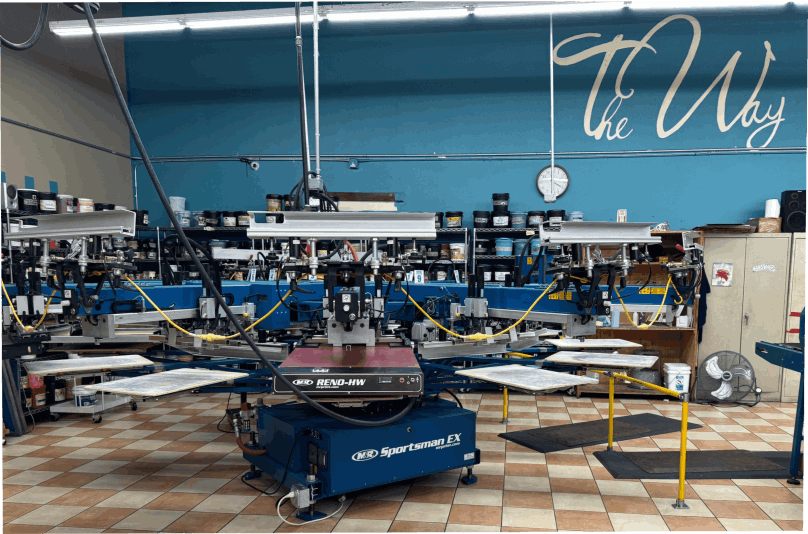
Screen printing is a printing technique where a mesh is used to transfer ink (or dye) onto a substrate, except in areas made impermeable to the ink by a blocking stencil. A blade or squeegee is moved across the screen to fill the open mesh apertures with ink, and a reverse stroke then causes the screen to touch the substrate momentarily along a line of contact. This causes the ink to wet the substrate and be pulled out of the mesh apertures as the screen springs back after the blade has passed. One colour is printed at a time, so several screens can be used to produce a multi-coloured image or design.
Traditionally, silk was used in the process. Currently, synthetic threads are commonly used in the screen printing process. The most popular mesh in general use is made of polyester. There are special-use mesh materials of nylon and stainless steel available to the screen-printer. There are also different types of mesh size which will determine the outcome and look of the finished design on the material.
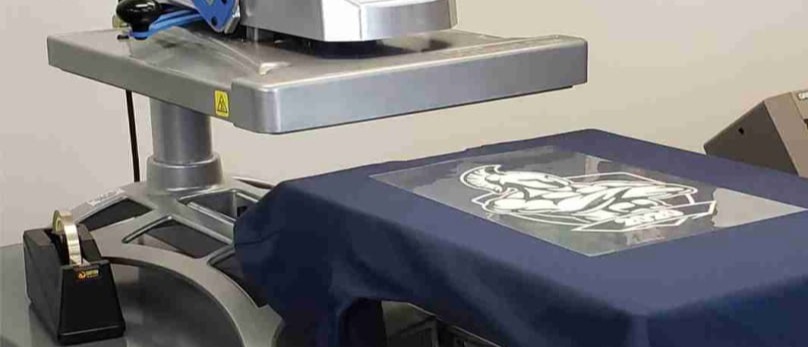
Heat transfer is a discipline of thermal engineering that concerns the generation, use, conversion, and exchange of thermal energy (heat) between physical systems. Heat transfer is classified into various mechanisms, such as
thermal conduction, thermal convection, thermal radiation, and transfer of energy by phase changes. Engineers also consider the transfer of mass of differing chemical species (mass transfer in the form of advection), either cold or
hot, to achieve heat transfer. While these mechanisms have distinct characteristics, they often occur simultaneously in the same system
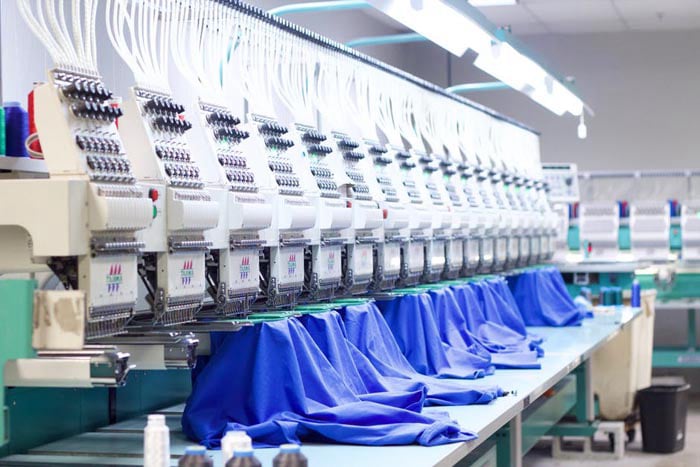
Embroidery is the art of decorating fabric or other materials using a needle to stitch thread or yarn. Embroidery may also incorporate other materials such
as pearls, beads, quills, and sequins. In modern days, embroidery is usually seen on caps, hats, coats, overlays, blankets, dress shirts, denim, dresses,
stockings, scarfs, shoes, handbags and golf shirts. Embroidery is available in a wide variety of thread or yarn colour. It is often used to personalize gifts or
clothing items.
Some of the basic techniques or stitches of the earliest embroidery are chain stitch, buttonhole or blanket stitch, running stitch, satin stitch, and cross
stitch.[1] Those stitches remain the fundamental techniques of hand embroidery today

Free AI Website Creator